


Cheap fast fashion doesn’t have to mean flimsy. Learn the exact fabric labels, spec numbers, and stitching cues that separate a $12 steal from a $12 mistake before you order.
Start With the Fiber Content — It’s the Cheapest Tell
Every legitimate listing, even on SHEIN, Temu, Amazon, or Walmart, includes a fabric composition somewhere in the details. Scroll past the price and hero photos to find it. A line like “95% polyester, 5% spandex” tells you more about how a garment will feel, breathe, and last than any five-star review, so make reading it the first thing you do.
Natural fibers such as cotton, linen, wool, and silk breathe well and tend to age gracefully, but they wrinkle and can shrink. Synthetics like polyester, nylon, and acrylic resist wrinkles and cost pennies to produce, which is why $8 tops are almost always 100% poly. That’s not automatically bad, but pure polyester traps heat, holds odor, and pills faster at friction points like underarms and inner thighs.
Blends are where smart fast fashion lives. A cotton-poly mix around 60/40 gives you breathability plus durability, and a touch of elastane or spandex, usually 3 to 5%, adds stretch and helps a garment hold its shape through washes. Be wary of viscose, rayon, and modal in anything you’ll wash often; they feel silky in photos but can lose shape, pill, or demand hand-washing you’ll never actually do.
If a listing hides the fiber content or only says “fashion fabric” or “mixed material,” treat that as a red flag. Reputable sellers disclose composition because they’re legally required to for US imports. Vague language usually signals the cheapest possible mystery blend, and you’re gambling on both feel and longevity.
Learn to Read Fabric Weight and GSM
Beyond fiber type, weight decides whether a shirt is see-through and whether jeans feel substantial. The pro metric is GSM, or grams per square meter, and more listings now publish it. Higher GSM generally means thicker, more opaque, and more durable fabric, so it’s worth hunting for in the specs.
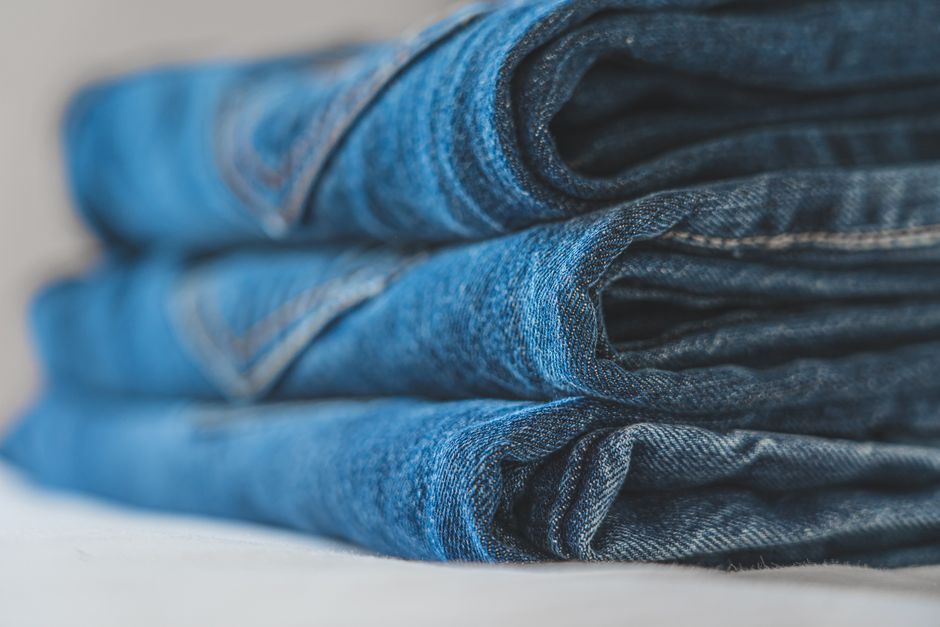
A few benchmarks are worth memorizing. A lightweight summer tee runs 120 to 150 GSM, a solid everyday cotton tee sits around 180 to 220 GSM, and a heavyweight tee or sweatshirt starts near 300 GSM. Denim is measured in ounces per square yard instead, where 9 to 11 oz is lightweight and 12 to 14 oz is the sturdy midweight most jeans should hit. If a $15 pair lists 7 oz denim, expect them to feel like pajama pants.
When GSM isn’t listed, use proxies. Check the item weight in the shipping details, since a men’s tee that weighs 4 ounces total is thin while one at 7-plus ounces has real fabric. Zoom into photos for backlighting or shadows through the cloth, which expose sheer material. And scan reviews for the words “thin,” “sheer,” “flimsy,” or “you can see through it,” which show up constantly on the worst offerings.
Structure matters too. Ribbed knits, French terry, and twill weaves hold up better than flat, loosely knit jersey, so look for those terms in the description. A waffle knit or a brushed fleece lining tells you the maker invested in the fabric, while “soft breathable material” tells you nothing at all.
Read the Stitching in Photos and Reviews
You can’t touch a seam online, but customer photos are a goldmine and far more honest than the studio shots. On Amazon, filter reviews by “with images,” and on SHEIN and Temu scroll to the customer gallery. Real-world photos reveal puckering seams, crooked hems, uneven dye, and thread that doesn’t match, none of which survive a brand’s polished catalog.
Know what good stitching looks like. Seams should be straight and flat with tight, even stitches, roughly 8 to 12 per inch on quality garments. High-stress seams at the shoulders, crotch, and armholes ideally show double or reinforced stitching. Loose threads hanging everywhere, visible skipped stitches, or a single line of stitching on a stress seam all predict early blowouts.
Check the small details cheap factories skip. Do prints and stripes line up across seams, or does the pattern jump mid-shirt? Are buttons sewn on securely with matching thread, and is a spare included? Do zippers sit flat in the photos, or do they ripple and pull? Bunched fabric around a zipper means it was sewn in sloppily and will snag. Then sort reviews by lowest rating first: one person saying “seam ripped” is noise, but twenty saying “fell apart after one wash” is a pattern.
Stress-Test It the Day It Arrives
Your best quality check happens after delivery, during the return window, so inspect immediately before you wash the item or clip the tags. Most US retailers give you 30 days, SHEIN and Temu run their own windows that often reach 30 to 45 days, and Amazon typically offers 30. Mark the deadline in your phone the moment the package lands.
Do the tug test on seams by gently pulling the fabric apart across a seam. If you see daylight between the stitches or the seam starts to gap, the stitching is too loose or the thread too weak. Stretch a knit and let go; quality fabric snaps back while cheap material stays stretched out or goes wavy. Rub two sections together at a friction point to see if it pills on the spot.
Hold the garment up to a bright window to check opacity, then turn it inside out. Well-made pieces have finished or serged interior seams that won’t unravel, while raw, frayed edges inside signal corner-cutting. A strong chemical odor can mean heavy dye or finishing chemicals; airing it out helps, but an overwhelming smell is a fair reason to return. If something fails, photograph the defect and start the return right away, since for sub-$15 items sellers like Temu and SHEIN often refund without asking you to ship it back.
Shop Smarter to Skip the Duds Entirely
The easiest quality check is buying from sellers who’ve already earned it. On Amazon, favor listings with thousands of reviews above 4.2 stars and a high volume of image reviews. A “1,000-plus bought in past month” tag paired with consistent 4-star-plus feedback beats a shiny new listing with 12 perfect reviews that may well be seeded.
Use price as a signal without treating it as gospel. A $6 dress and a $6 phone case cost about the same to ship, but the dress needs yards of fabric, thread, dye, and labor, so rock-bottom pricing usually comes out of material quality. Expensive doesn’t automatically mean good, but deeply underpriced apparel is quietly telling you where it cut corners.
Time your buys around real US sale events instead of chasing flash-sale countdown timers, which reset endlessly and rarely reflect a true discount. Target, Walmart, and Amazon run genuine markdowns around Presidents’ Day, Memorial Day, the Fourth of July, Labor Day, Black Friday, and end-of-season clearance. On Amazon, a price tracker like CamelCamelCamel confirms whether a “deal” actually sits below the recent average, and once you know which sellers stitch a straight seam and list honest GSM, you can re-order their winners with confidence.