


That $180 coat can be cheaper than a $25 one — it all depends on how often you actually wear it. Here’s the simple math that tells you which buys pay off.
The Formula: Price Divided by Realistic Wears
Cost-per-wear is one line of math: take what you actually pay — sticker price minus the discount, plus tax and shipping — and divide by the number of times you will genuinely wear the item. A $130 pair of boots worn 200 times over three winters runs about 65 cents per wear. A $16 clearance top you wear twice and retire costs $8 a wear. On paper the top was cheap; per wear, it was one of the priciest things you bought.
The word “realistically” carries the whole rule. It is easy to picture wearing a new blazer twice a week, but look at how you actually dress and spend weekends. A quick gut check: how many times did you wear the last thing you bought in this same category? If your current everyday jeans have logged maybe 150 wears, that is your baseline for the next pair — not the 300 you imagine.
Use the full landed cost, not the tag. A $40 dress with $9 shipping and $4 tax is a $53 dress, and if it needs a $15 hem to hang right, it is a $68 dress. Alterations, dry-clean-only labels, and fussy storage all raise the top number, which pushes cost-per-wear up before you have worn the thing once.
Estimate Wears Honestly — Your Closet Has the Data
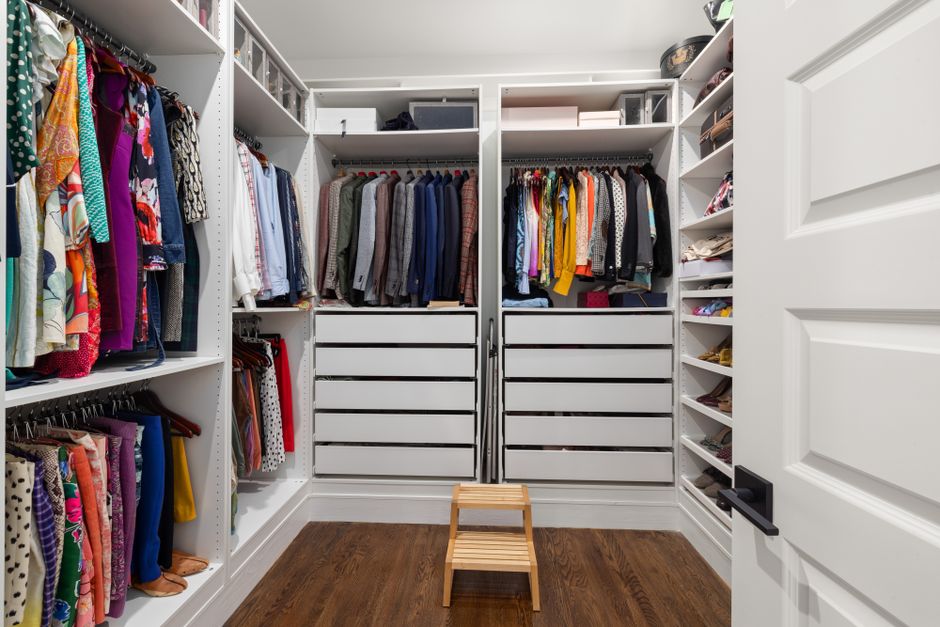
You do not have to guess in a vacuum — your closet is a spreadsheet of past decisions. Pull three items you have owned about a year: a workhorse you grab constantly, a “meh” piece you keep skipping, and a special-occasion buy. Roughly count the wears and divide. A $90 sweater at 60 wears is $1.50 a wear; a $35 going-out top at four wears is nearly $9. Real numbers train your estimates better than optimism.
Patterns show up fast. Most people find their true workhorses cluster in a few categories — everyday denim, plain tees, sneakers, a go-to jacket — and pile up wears in the low hundreds. Statement prints, itchy fabrics, and “for a someday event” pieces stall in the single digits no matter how much you loved them in the cart.
Watch the friction that quietly kills wear counts: hand-wash-only fabrics, items that need ironing before every outing, or colors that match just one thing. Each hurdle between the hanger and the door subtracts wears, and every subtracted wear raises cost-per-wear. The machine-washable version you reach for on autopilot almost always wins the math.
Set a Cost-Per-Wear Target by Category
Give each category a target and the rule turns from theory into a checkout decision. Reasonable everyday goals for most US shoppers: under $1 per wear for basics and denim, $1 to $2 for shoes and everyday jackets, and $2 to $3 for outerwear you lean on all season. These are not laws — they are guardrails that keep a cute impulse from slipping past your budget.
Occasion and trend pieces get their own looser math. A wedding-guest dress worn four times might land at $10 to $15 a wear and still be reasonable, since the alternative is renting or a panic buy. The trap is applying an everyday target to an occasion item and feeling guilty, or an occasion mindset to a daily basic and overspending on something you will wear to death anyway.
Run the target backward to get a walk-away price. If you want everyday sneakers under $1 a wear and your last pair lasted about 250 wears, your ceiling is roughly $250 — anything below that clears the bar. This flips sales in your favor: instead of asking “is 40% off a good deal,” you ask “does this land under my per-wear target” — which no marketing banner can fake.
Where Cost-Per-Wear Beats a Low Sticker Price
Ultra-cheap sites like SHEIN and Temu win the sticker-price game and often lose the cost-per-wear one. A $7 top is a bargain only if it survives more than a couple of washes and you actually reach for it. When thin fabric pills and the color fades after two cycles, three wears is a realistic ceiling — and $7 over three wears is $2.33, worse per wear than a well-made $50 top you keep for years.
That does not make fast fashion always wrong; it makes it situational. For a one-time themed party, a costume, a trend you will be over by fall, or a kid growing two sizes a year, a low sticker and low wear count can pencil out fine. The mistake is buying disposable-quality clothes for a workhorse role, where all the value comes from racking up hundreds of wears the fabric cannot deliver.
Returns are the hidden line item. Free, easy returns at Amazon, Target, or Zappos let you bail on a bad fit for nothing, so a miss costs only time. Sites with return-shipping fees, store-credit-only policies, or tight 30-day windows quietly raise your effective cost, because items you cannot return but never wear still count against your spending at an infinite cost-per-wear.
The Buy-or-Skip Tests to Run Before Checkout
Before you hit purchase, run the 30-wears test popularized by sustainable-fashion advocates: will you honestly wear this at least 30 times? If you can picture 30 specific occasions, it is usually a keeper. If you stall at five, the price per wear will sting no matter how low the tag.
Add the full-price test. Would you buy this if it were not on sale? A discount only saves money on something you genuinely wanted; 60% off an item you would ignore at full price is 100% of a purchase you did not need. “Compare at” prices and countdown timers exist to blur that line — cost-per-wear is your defense, because it ignores the discount and counts only wears.
Check versatility with the three-outfits rule: name three outfits already in your closet that this piece completes. Something that pairs with what you own multiplies its wears; something that needs two more purchases to work is really the cost of three items. For anything above your comfort threshold — say $75 — leave it in the cart a day or two, then recompute with a sober wear estimate and let that number make the call.