


SHEIN’s low prices only pay off when the fit is right — and their charts hold more clues than the size letter suggests. Here’s how to decode them before you check out.
Why One SHEIN “Medium” Never Matches the Next
SHEIN pulls from thousands of independent suppliers, and there’s no single house standard tying them together. That’s why the Medium blouse you loved can share zero DNA with the Medium jeans in your cart — the two garments were cut in different factories to different specs. Treat every product page as its own store.
On top of that, SHEIN’s numbers skew smaller than what US brands like Target or Old Navy have trained you to expect. Shoppers routinely find they need to jump one full size, and sometimes two, from their American default. If you wear a US 8, don’t assume a SHEIN 8 — the label is a starting guess, not an answer.
The upside is that SHEIN publishes far more measurement data than most fast-fashion sites, buried in tabs people scroll right past. Two size charts usually live on a single listing: a general body-measurement guide and a garment-specific table with the actual dimensions of that exact piece. The second one is where the real decision gets made, and it’s the tool most shoppers ignore.
Because returns can cost you — some items ship from overseas and refunds sometimes land as store credit — getting the size right the first time is what keeps the low price actually low.
Measure Yourself Once, Then Shop With Numbers
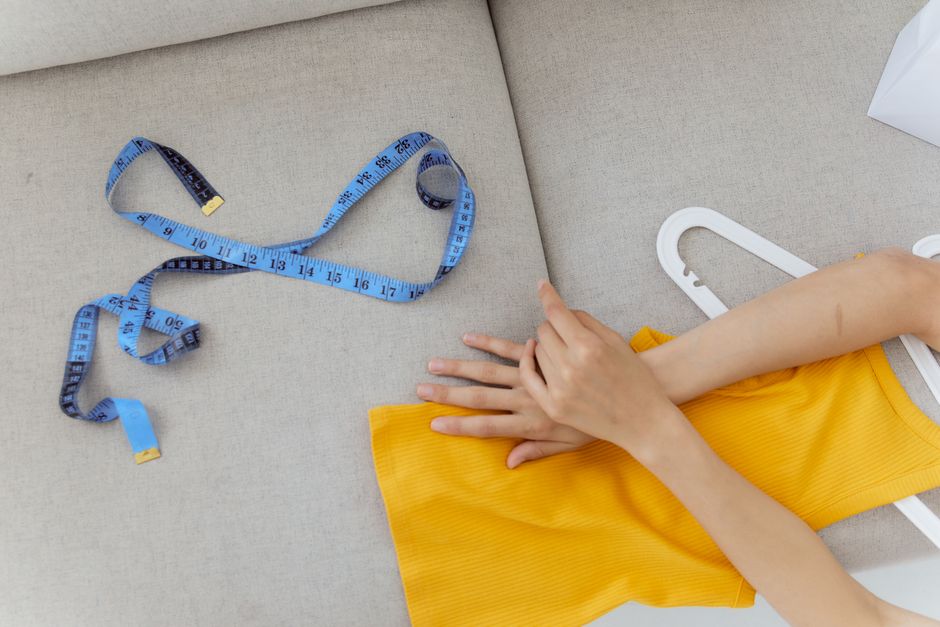
Grab a soft tape measure and record four numbers: bust (around the fullest part), natural waist (the narrowest point above your belly button), hips (fullest part, usually 7-9 inches below the waist), and your height. Write them in both inches and centimeters, because SHEIN often lists garment specs in cm. Save them in your phone so you’re never guessing at checkout.
Now flip to the product’s size chart and compare your body numbers to the “body” measurements column — not the size letter. If your bust is 36 inches and the chart says a Medium fits a 35.5-inch bust while a Large fits 37.5, you’ve got a real decision based on the garment type, not a coin flip on S/M/L.
Pay attention to which measurement matters most for each piece. For a fitted dress, hips and bust rule. For high-waisted pants, the waist number is everything, and an inch too small means you won’t button them. For an oversized sweater, none of it matters much — the loose cut is the point.
One habit saves the most grief: compare against a garment you already own and love. Lay your favorite jeans flat, measure the waist and inseam, and match those numbers to SHEIN’s chart. That real-world reference beats any size letter every time.
Read the Garment Table, Not Just the Body Chart
Scroll past the generic body chart and you’ll usually find a second table with columns for bust, shoulder, sleeve, waist, hip, and length — these are the flat measurements of the finished piece, not your body. This is the most useful data on the entire page, and reading it right is what separates a good order from a donation-pile mistake.
Here’s the trick: the gap between the garment’s bust measurement and your own is the “ease,” the wiggle room built into the cut. A woven top with only an inch of ease will feel snug and structured; four or more inches means it’s meant to drape loose. If you like a relaxed fit, aim for a garment bust three to five inches larger than yours.
The length number quietly ruins more orders than width ever does. A dress listed at a 33-inch length hits very differently on someone 5’2″ versus 5’9″. Hold your tape from your shoulder down to where you want the hem to land, and check that against the length column before you fall for the photo.
For pants, look for both the waist and the inseam. A 28-inch inseam is a cropped ankle length on a tall shopper and a full length on a petite one. If the table skips the inseam, the review section usually fills the gap with someone who mentions exactly how it hit them.
Mine the Reviews Like a Detective
SHEIN’s review section is genuinely useful because reviewers self-report their stats. Look for the fit summary meter near the ratings — it breaks buyer feedback into “True to Size,” “Small,” and “Large” percentages. If 60% say it runs small, that’s your cue to size up before you read a single comment.
Then scan for reviewers whose body matches yours. Many reviews list height, weight, bust, waist, and the size ordered, plus a note like “ordered M, fits perfect at 5’5″ and 140 lbs.” Find two or three reviewers within an inch or two of your measurements and copy whatever size worked for them.
Prioritize reviews with customer photos over the polished stock images. Buyer photos reveal how the fabric actually falls, whether a “white” top is see-through, and if the color matches the listing. A garment that looks structured on the model can photograph limp and thin in a real bedroom mirror — the reviews are where that truth lives.
Watch for repeated complaints, because patterns beat one-off gripes. If five people independently say the zipper is stiff, the arm holes are tight, or it shrank in the wash, believe them. One angry review can be a fluke; a recurring theme across dozens of buyers is data you can bank on.
Let Fabric and Fine Print Make the Final Call
Before you commit, read the material composition under the product details. A top that’s 95% polyester with 5% spandex will stretch and forgive a borderline measurement; 100% cotton or a stiff woven has almost no give, so size up if you’re between sizes. Spandex or elastane above roughly 5% is your permission to size down for a body-hugging look.
Fabric weight tells you what season a piece really works for and how it’ll hang. Thin, gauzy materials cling and show every line, while heavier knits hold their shape. When the listing is vague, the buyer photos in the reviews are your best read on whether something looks cheap or genuinely wearable.
Check the return terms per item, too. SHEIN allows returns within a set window, but certain categories — bodysuits, swimwear, intimates, and some final-sale clearance pieces — are marked non-returnable, and refunds can arrive as store credit rather than cash back to your card. On those items, your measuring has to be airtight because there’s no do-over.
When you’re truly stuck between two sizes, size up on structured wovens and denim, and size down on stretchy knits. It’s easier to belt or tailor something slightly loose than to squeeze into a piece that won’t zip — and that single rule of thumb will quietly save you the most money over a year of shopping.